James White
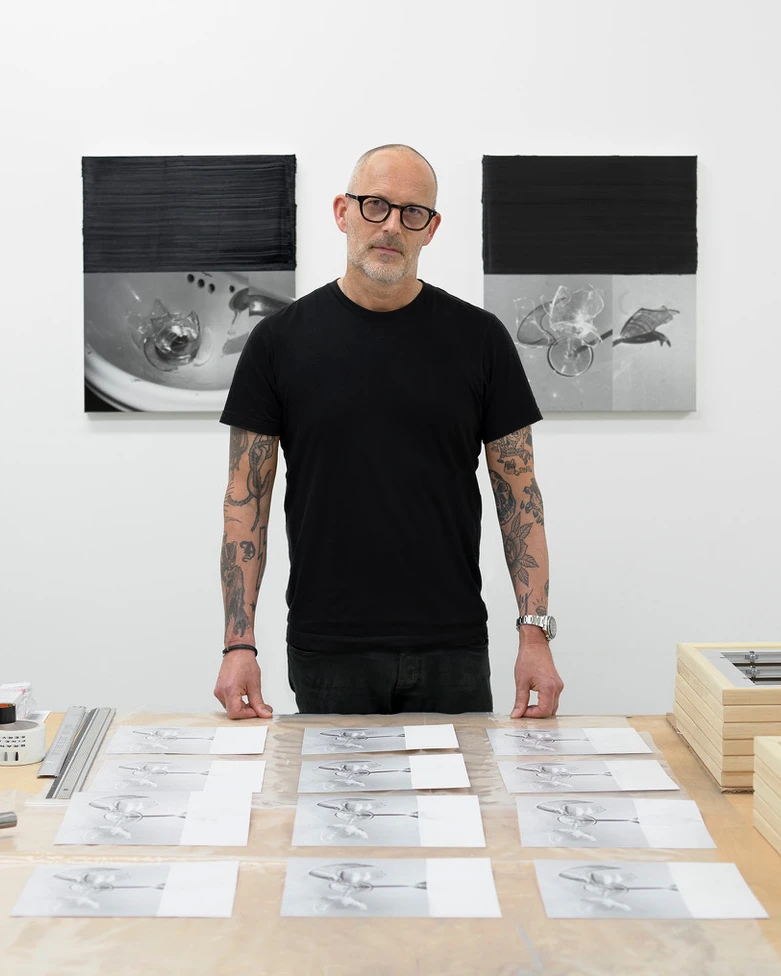
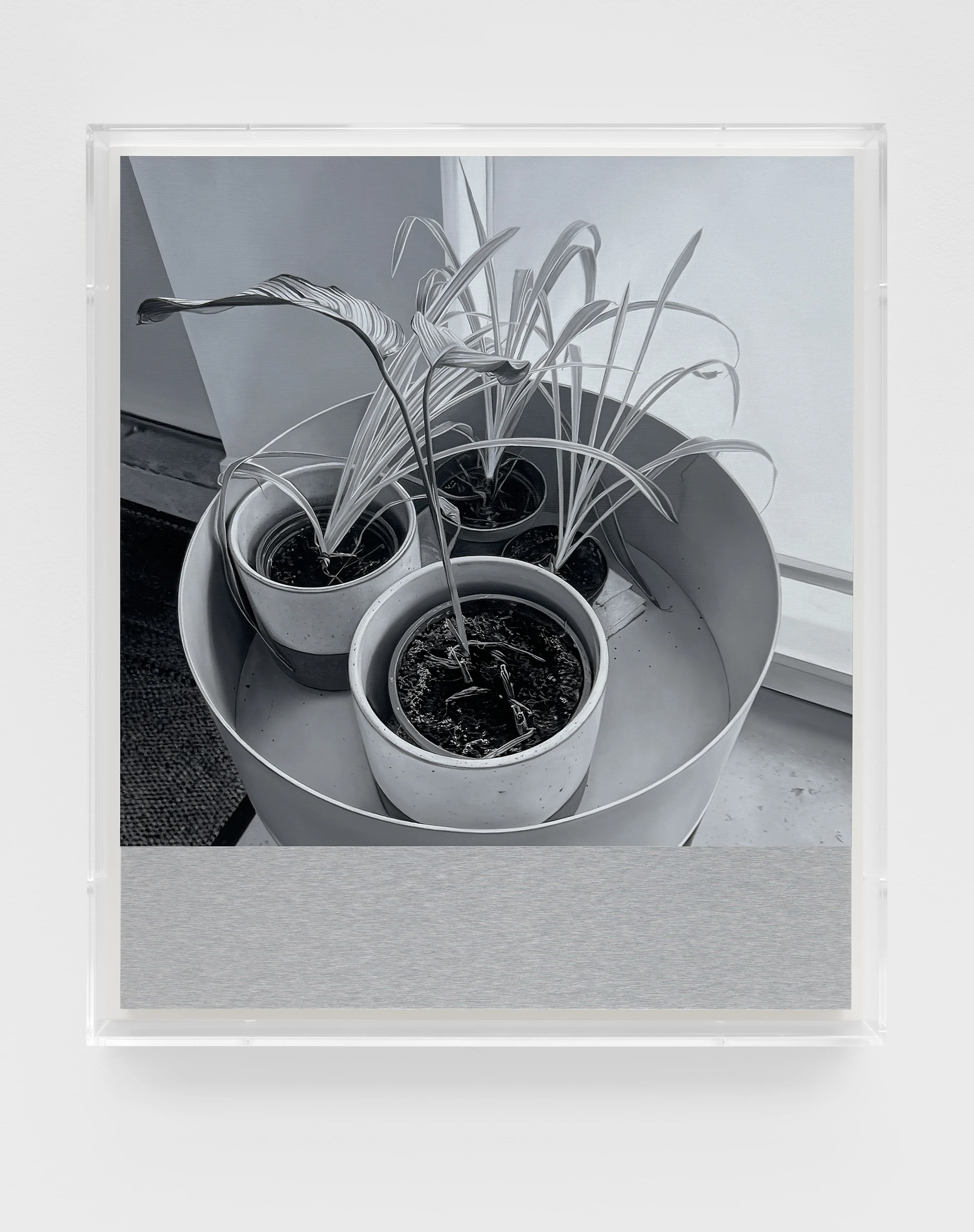
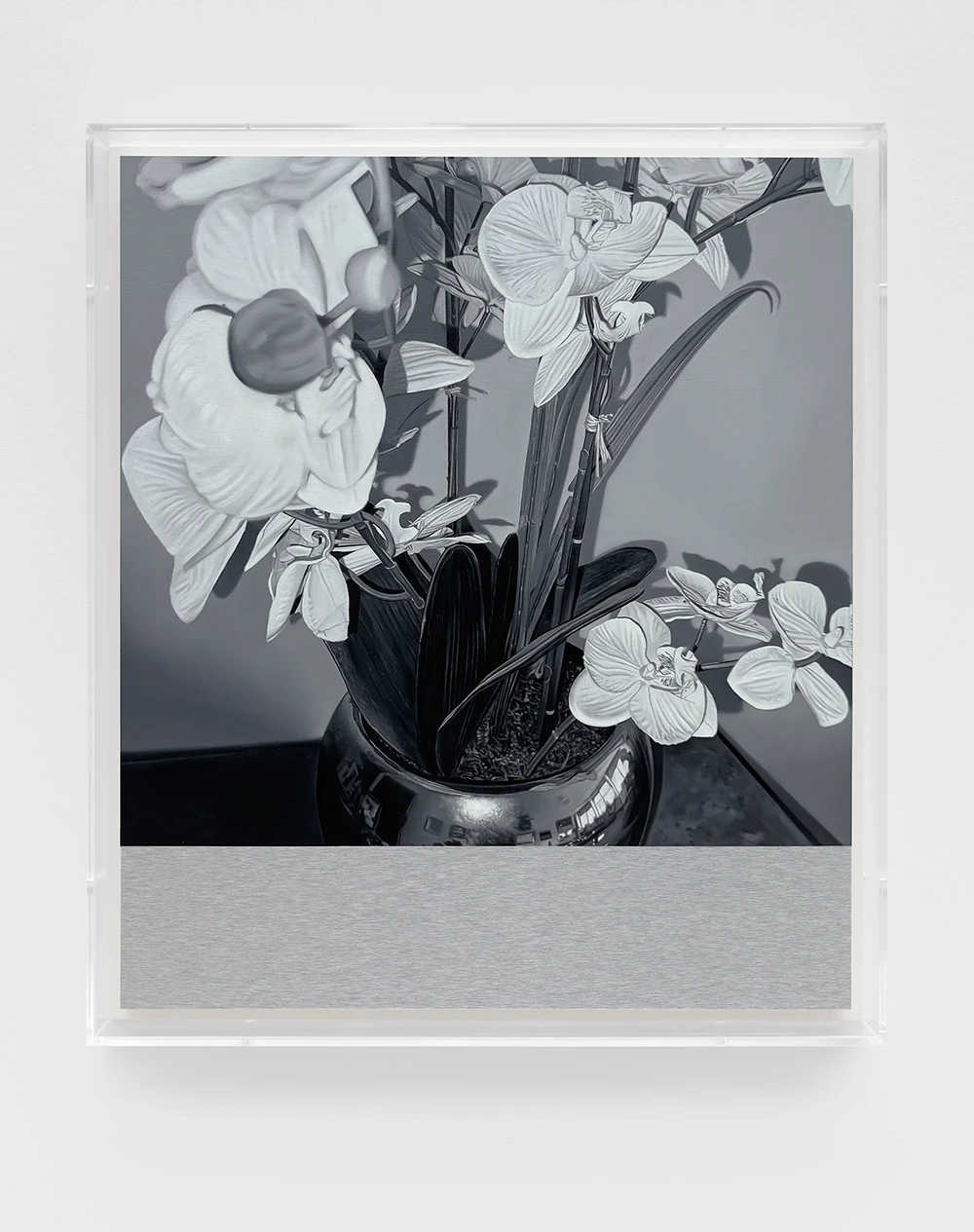
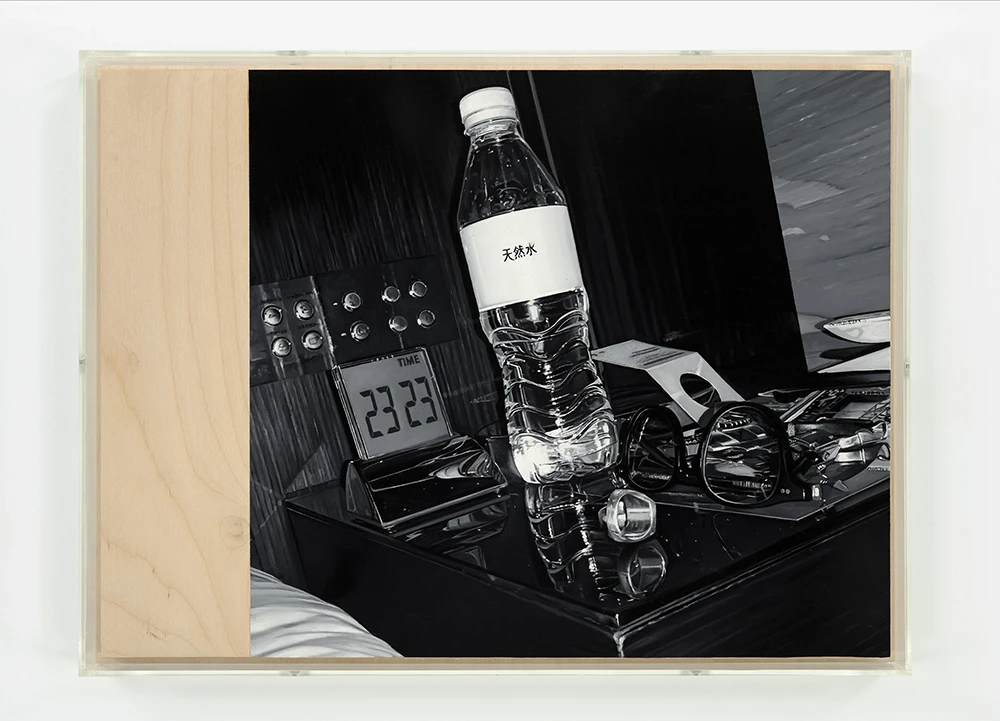
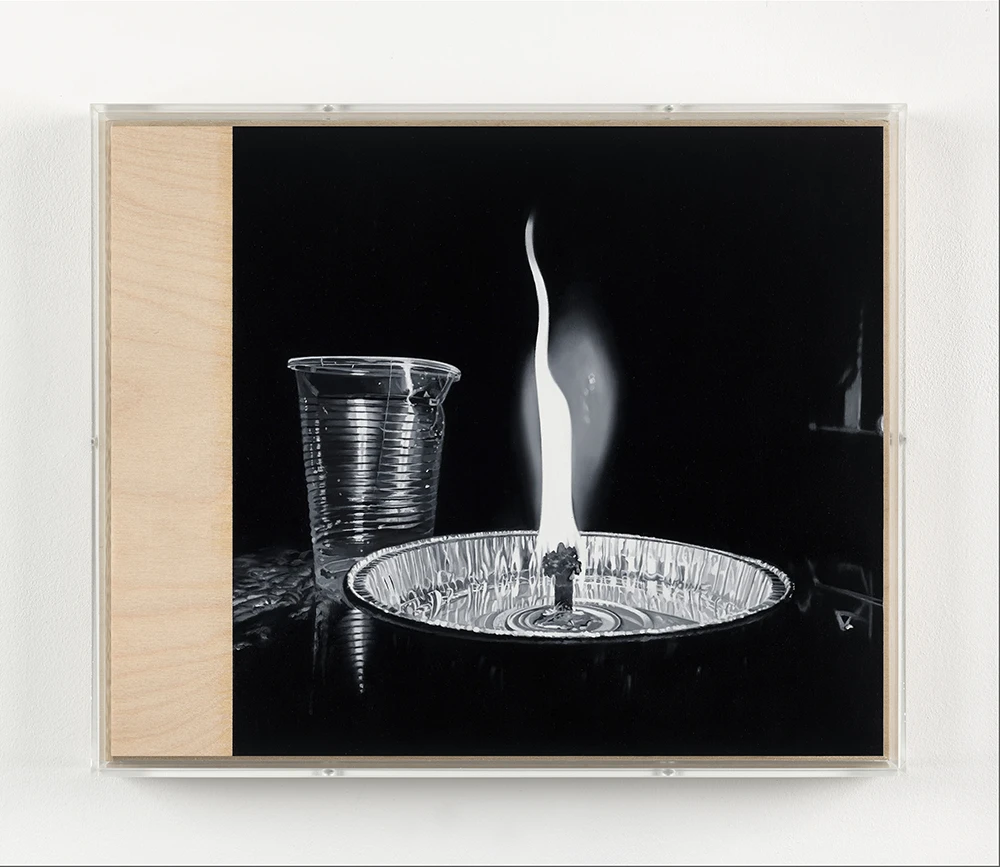
James White’s paintings inhabit a space between cinema and forensics, where the everyday object is reconfigured as a fragment of evidence. A drinking glass, a door handle, a folded towel—rendered with meticulous precision—are presented not as neutral things but as mute witnesses to events withheld from view. Their isolation recalls the forensic photograph, where the object is extracted from its context and preserved as a possible key to an absent narrative. At the same time, White’s framing borrows from the cinematic cutaway: those interstitial shots that linger on a detail, suspending narrative action while intensifying the tension of what remains unseen. In both registers, the object acquires an unstable significance, poised between the banal and the ominous.
The choice to work exclusively in black and white accentuates this ambiguity. Without the distraction of color, the paintings operate within the tonal economy of both surveillance imagery and classic film noir. Shadows fall with heightened drama, surfaces gleam with the uncanny sharpness of photographic stills. This chromatic restraint is not merely aesthetic but conceptual: black and white positions the image in a zone of uncertainty, evoking both the documentary truth-claims of forensic photography and the stylised artifice of cinema. The result is an oscillation between testimony and fiction, in which objects seem to offer evidence yet resist definitive interpretation.
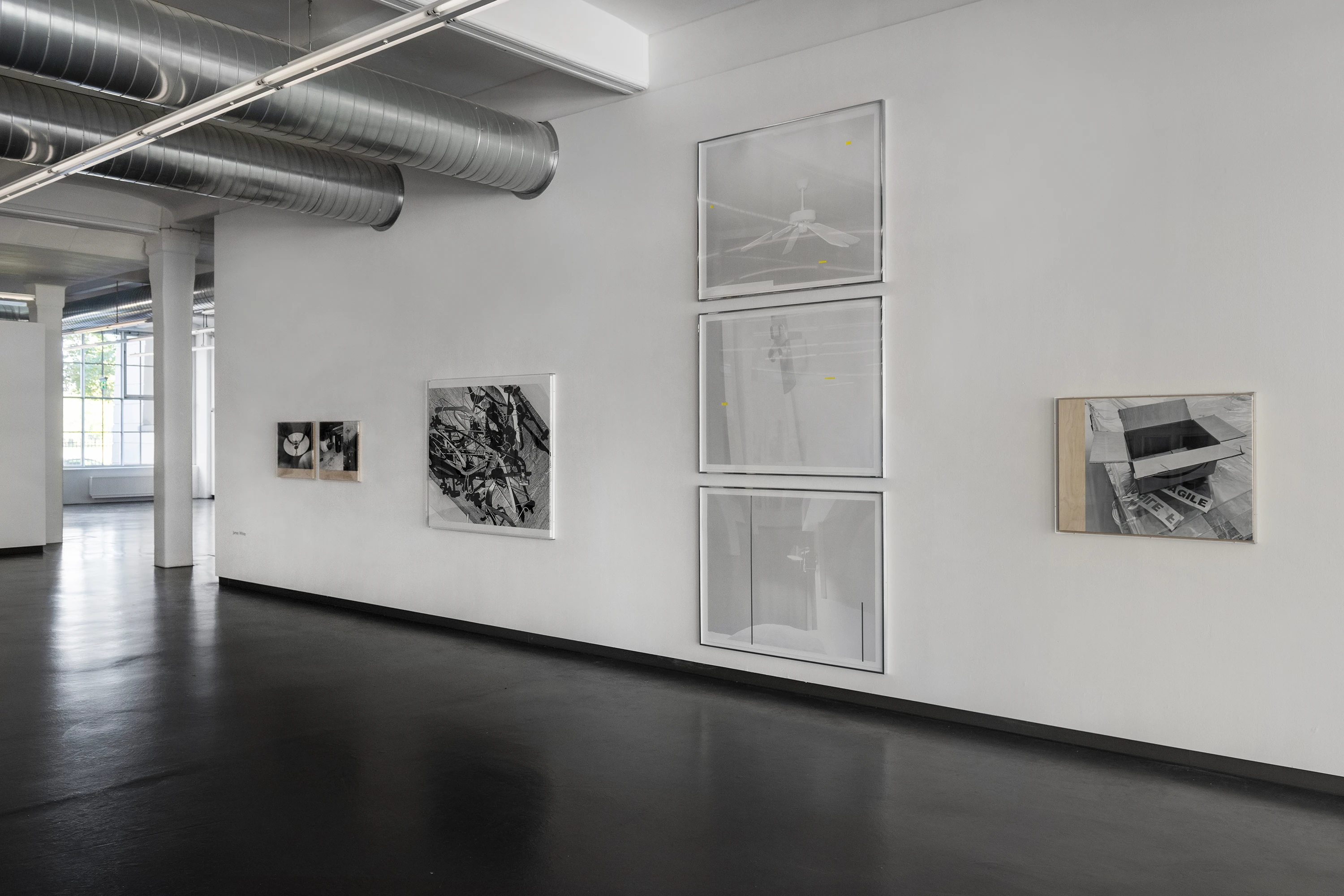
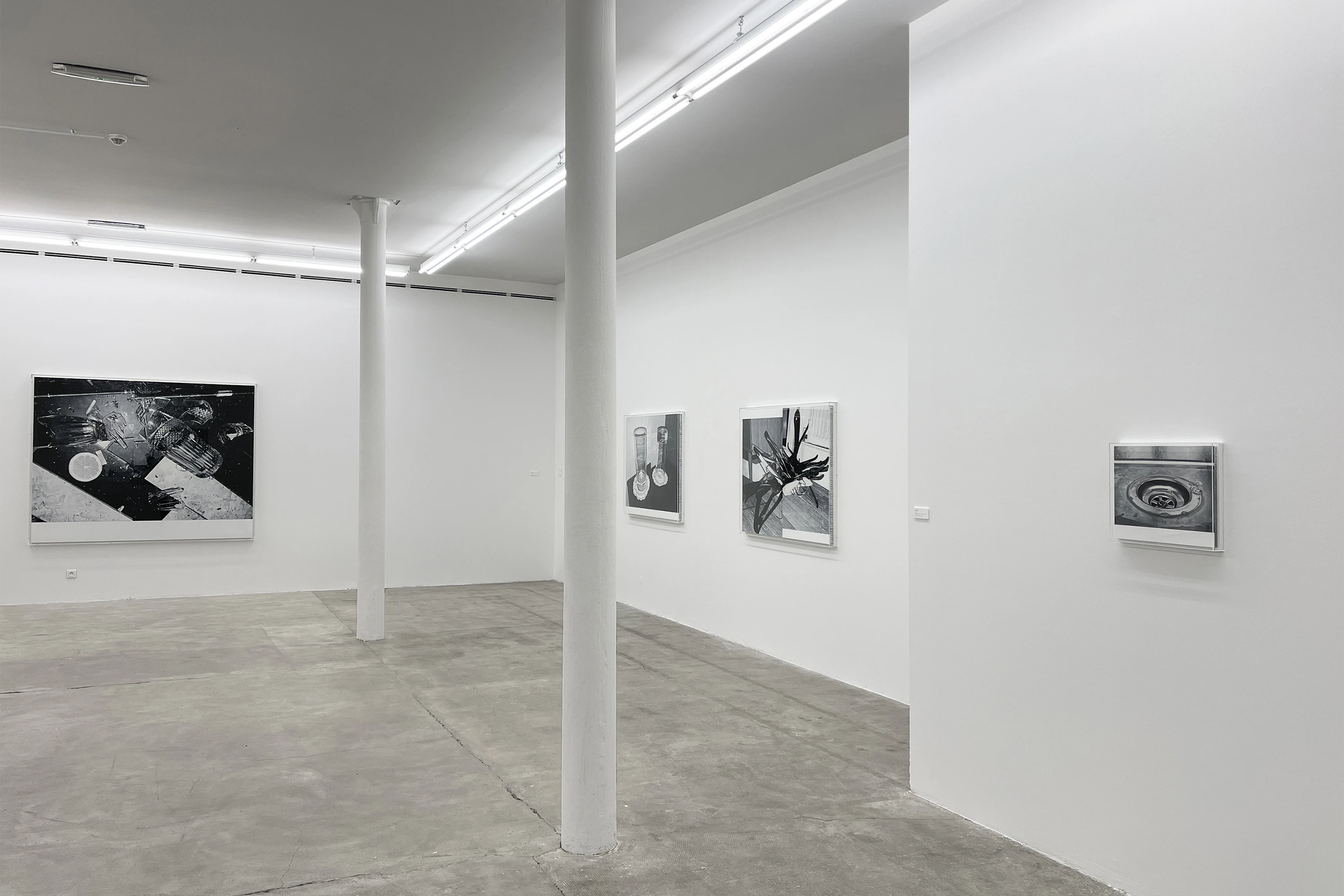
Presentation is equally crucial. Housed within Perspex box frames that resemble vitrines, the works are displayed as though specimens or artefacts. This mode of framing distances the object from lived experience, suspending it in a sealed environment where the viewer encounters it as evidence awaiting scrutiny. The vitrine-like enclosure enacts both preservation and alienation, encouraging a forensic mode of looking while underscoring the impossibility of accessing the event itself.
Through these strategies, White constructs an atmosphere of speculative narrative where the object becomes both a cipher and a witness. His paintings refuse closure, instead amplifying the tension between intimacy and estrangement, banality and suspicion. By invoking the forensic archive and the cinematic cutaway, White positions the viewer in a liminal role: at once detective, spectator, and voyeur, compelled to imagine a story that remains perpetually beyond reach.
download cv (pdf)
Exhibitions
James White
Rodder, New York, NY
March 2026
PaintingPhotography
H2 – Zentrum für Gegenwartskunst im Glaspalast, Augsburg, Germany
July 28, 2023 – January 28, 2024
I’ll See You When I See You
Fondation Fernet-Branca, St. Louis, France
June 12 – October 2, 2022
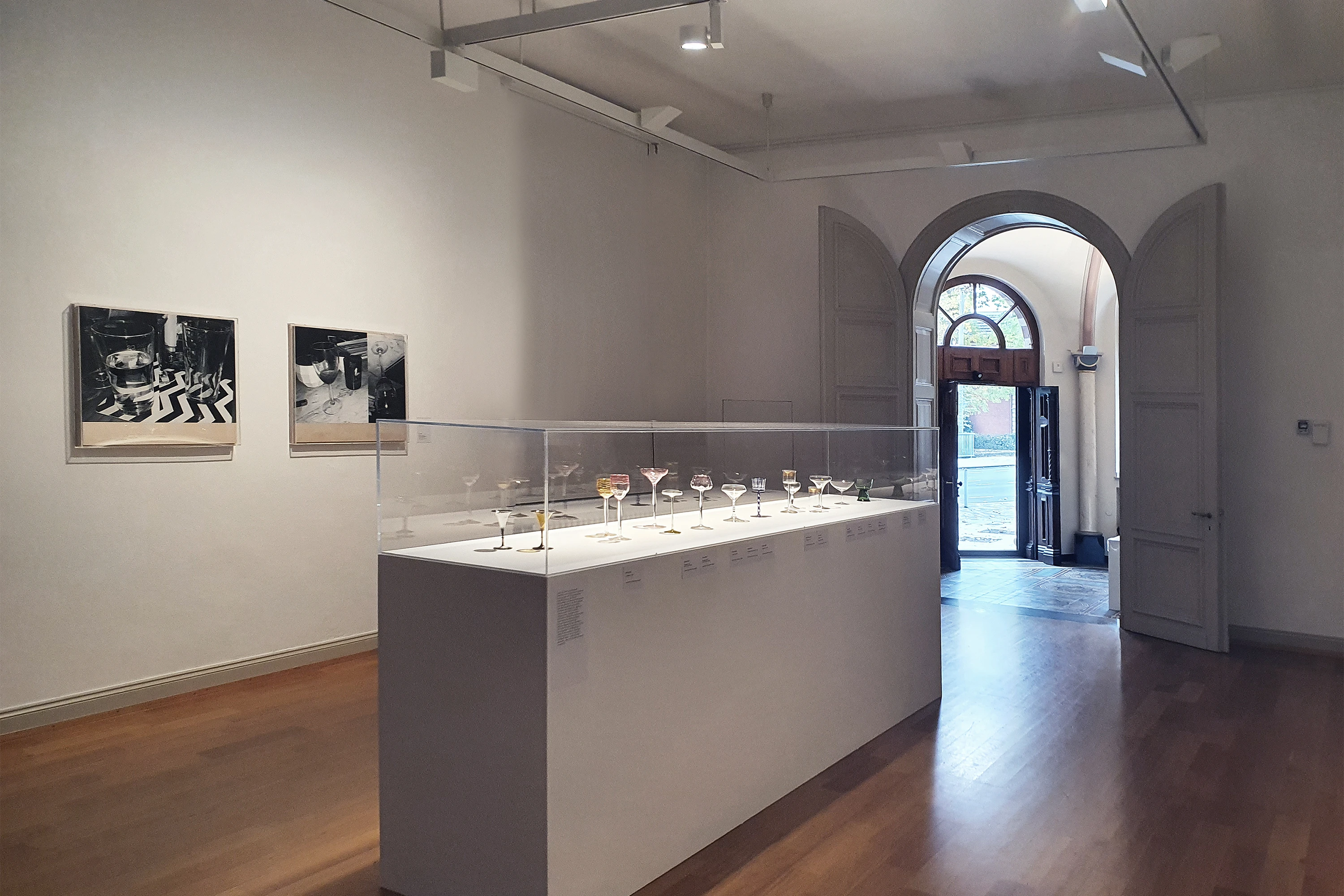
Fragile! Alles aus Glas: Grenzbereiche des Skulpturalen
Kunstmuseum Ahlen, Ahlen, Germany
June 19 – October 16, 2022

Kunstmuseum Ahlen, Ahlen, Germany
MARTa Herford Museum for Art, Architecture and Design, Herford, Germany
Selected Works

James White
H.P. 10, 2024
Oil and varnish on aluminium faced dibond panel in perspex box frame
22 × 18 × 2 inches
53 × 46 × 6 cm
James White
H.P. 9, 2024
Oil and varnish on aluminium faced dibond panel in perspex box frame
22 × 18 × 2 inches
53 × 46 × 6 cm
James White
Lockdown Painting 23, 2021
Oil and varnish on birch ply panel in Perspex box frame
12.6 × 16.5 × 1.9 inches
32 × 42 × 5 cm
James White
Lockdown Painting 7, 2020
Oil and varnish on birch ply panel in perspex box frame
13.4 × 15.7 inches
33 × 40 cm
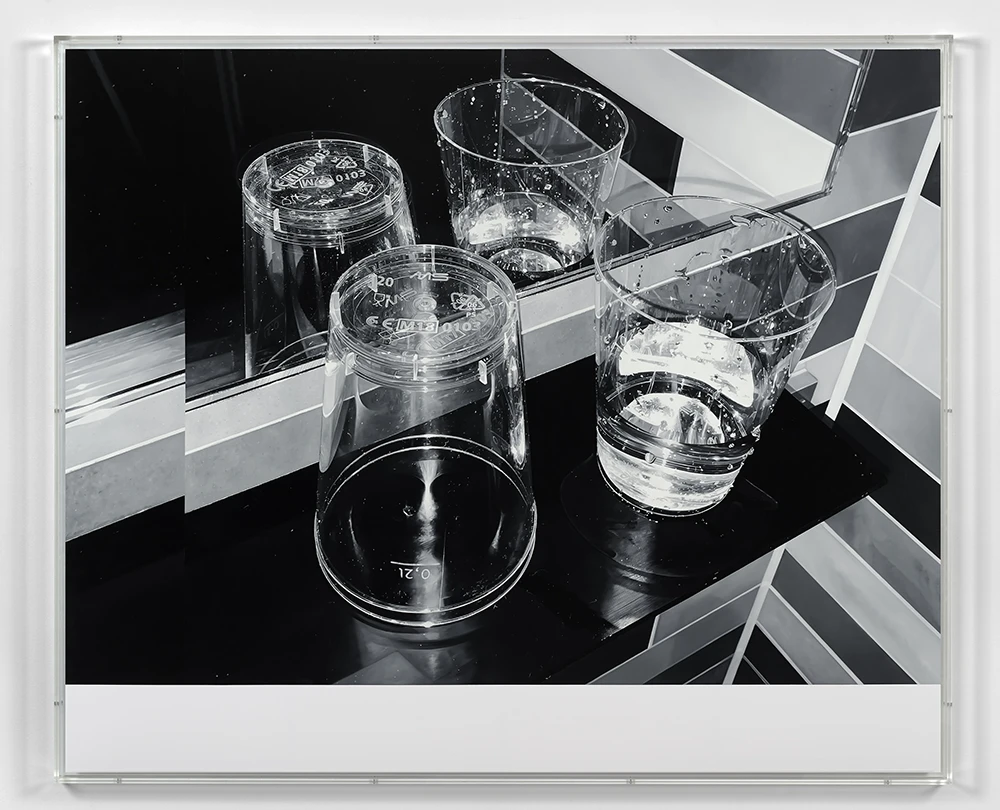
James White
The Large Glass 8, 2020
Oil and varnish on acrylic faced panel in perspex box frame
66.9 × 80.7 inches
170 × 205 cm
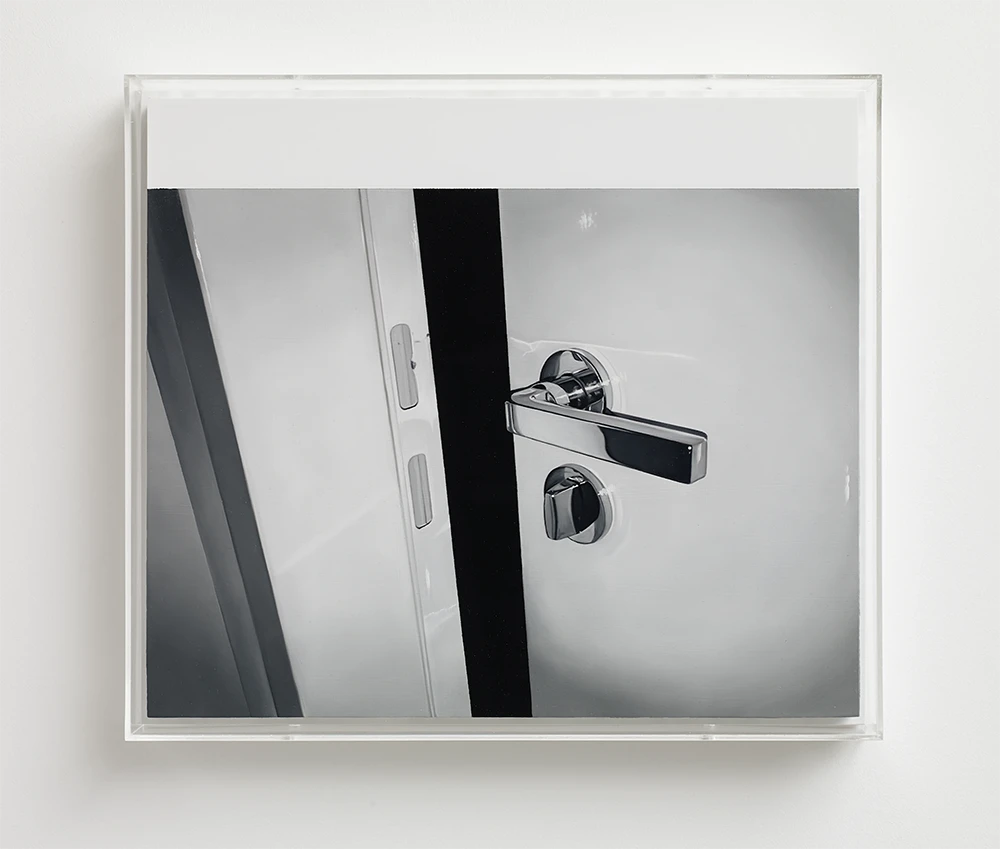
James White
Ajar, 2019
Oil and varnish on acrylic faced honeycomb panel in Perspex box frame
16 × 14 × 2 inches
41 × 36 × 5.5 cm
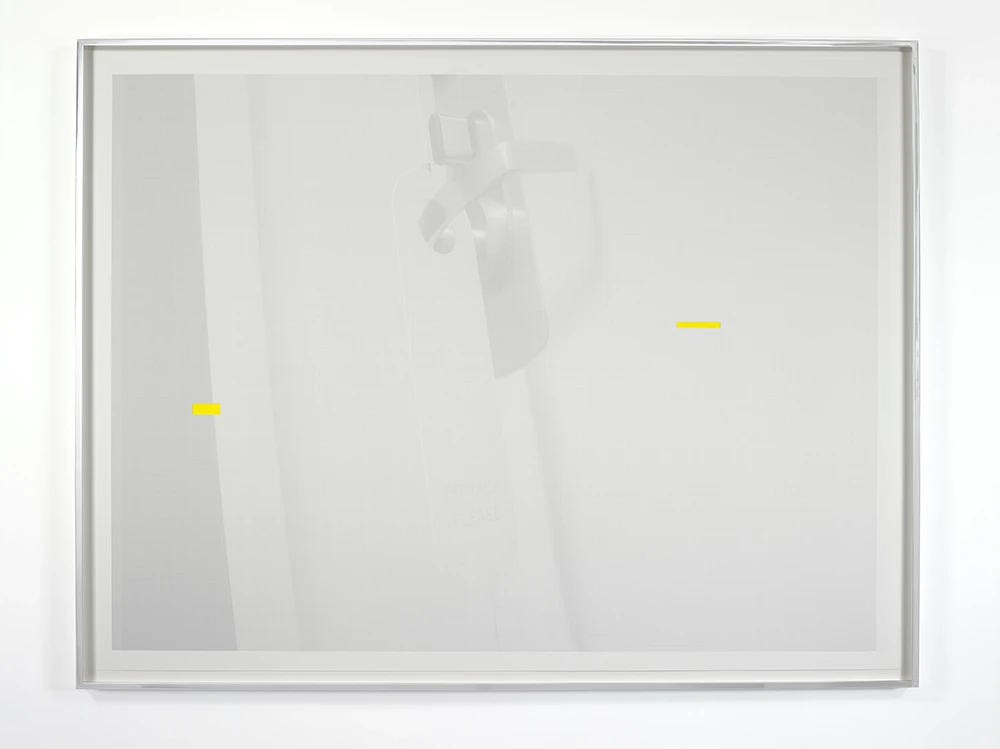
James White
I.A.R. 4, 2019
Archival pigment print and acrylic
44.1 × 58.3 inches
112 × 148 cm
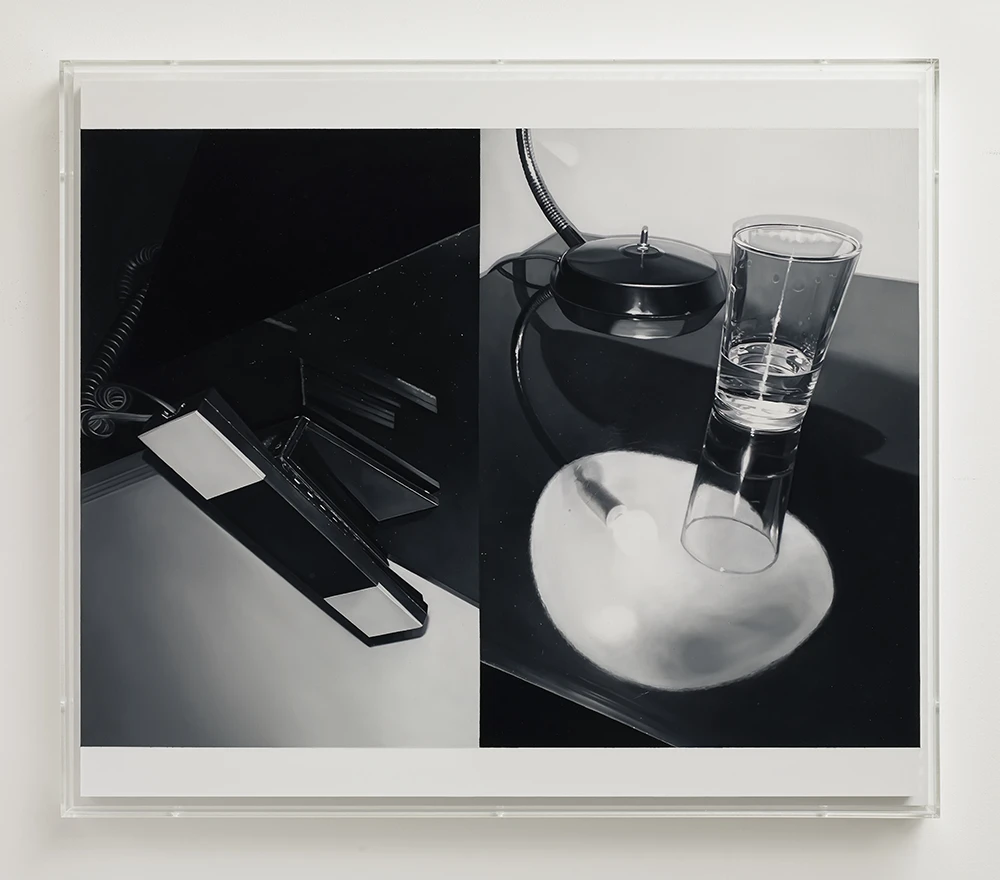
James White
Phone/ Water, 2019
Oil and varnish on acrylic faced honeycomb panel in Perspex box frame
28 × 24 × 2 inches
72 × 62 × 5.5 cm
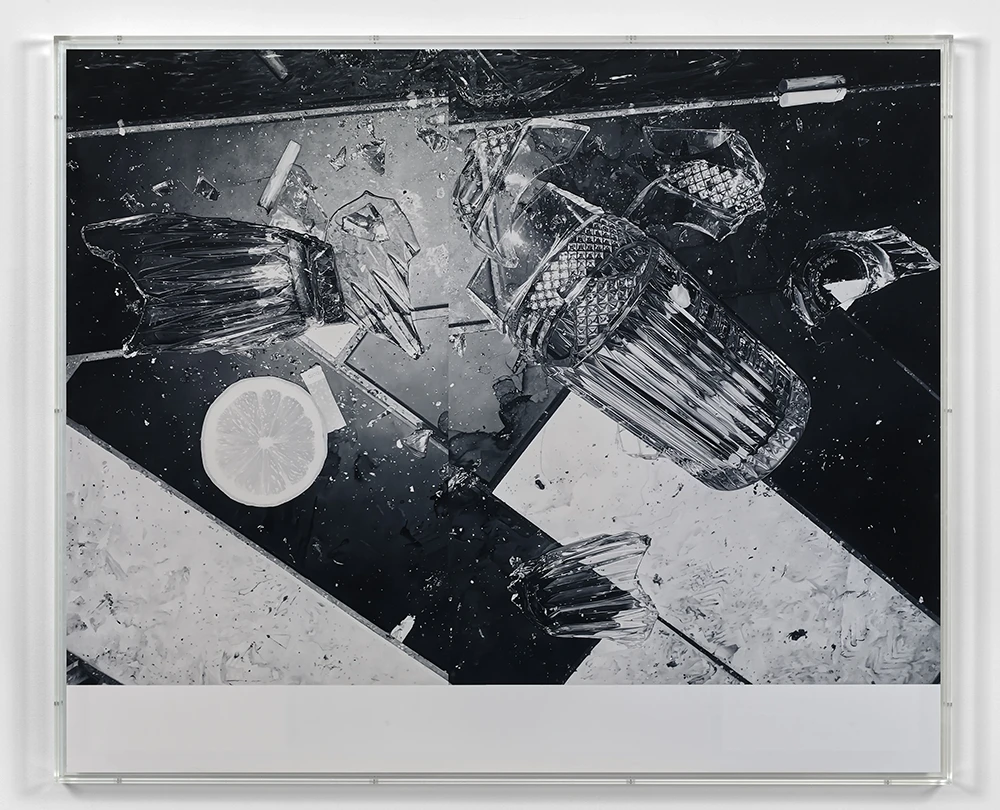
James White
The Large Glass 6, 2019
Oil and varnish on acrylic faced panel in perspex box frame
66.9 × 80.7 inches
170 × 205 cm
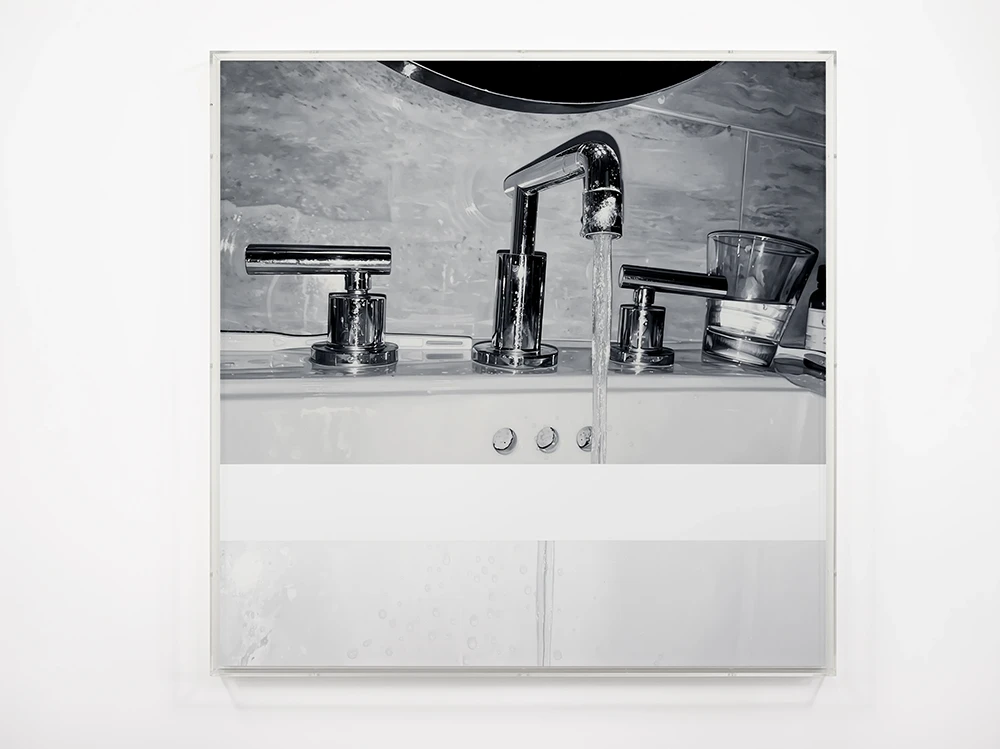
James White
Tap, 2018
Oil and varnish on acrylic faced panel in perspex box frame
48.8 × 48.8 inches
124 × 124 cm
-2017-thumb.webp)
James White
Untitled (reflection), 2017
Oil and varnish on birch ply panel in perspex box frame
30.3 × 39.4 inches
77 × 100 cm
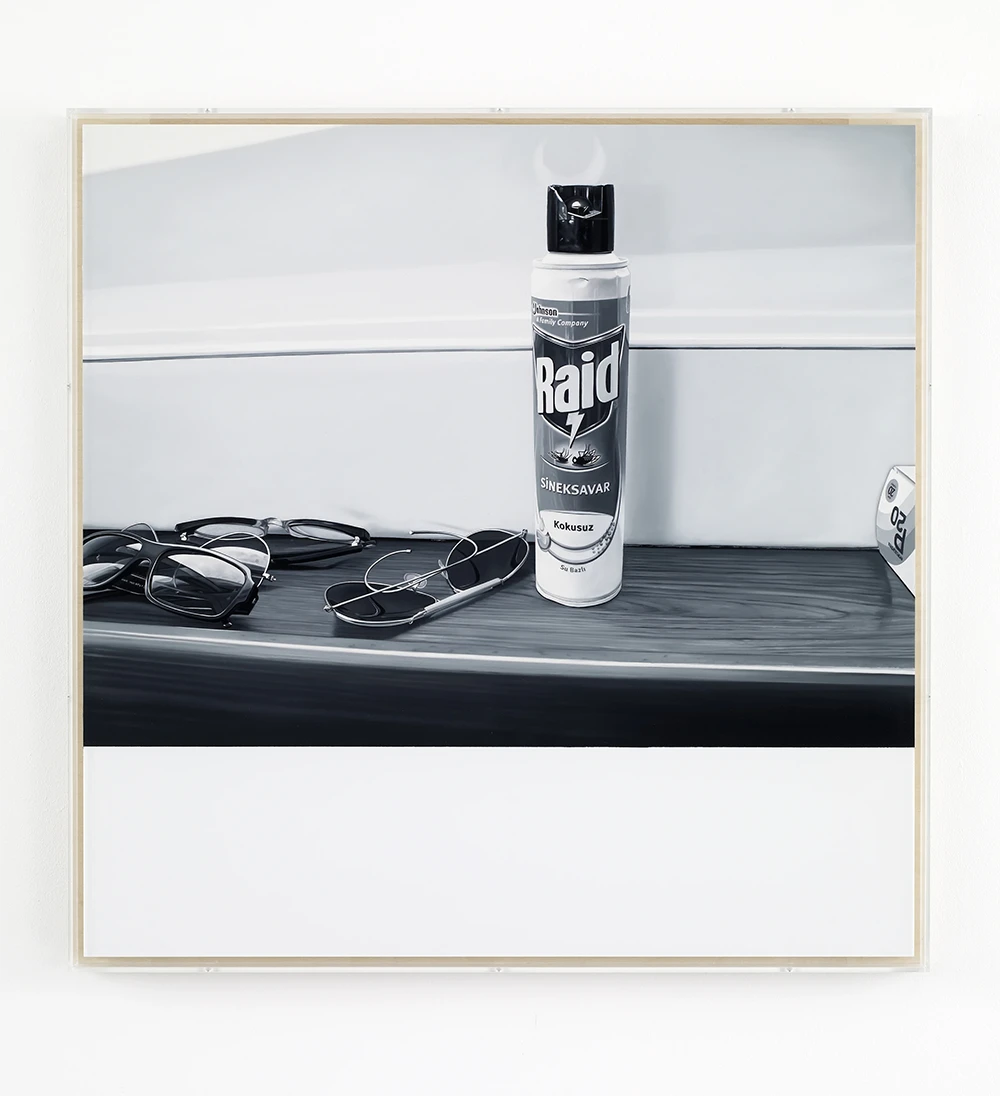
James White
Raid, 2013
Oil and varnish on acrylic faced panel in perspex box frame
33.5 × 33.5 inches
85 × 85 cm
-2012-thumb.webp)
James White
The Door (ajar), 2012
Oil and varnish on aluminum faced panel in perspex box frame
48.8 × 48.8 inches
124 × 124 cm

James White
Milk and Stuff, 2010
Oil and varnish on birch ply panel in perspex box frame
29.5 × 39.4 inches
75 × 100 cm

James White
Whipped Silk, 2008
Oil and varnish on birch ply panel in perspex box frame
39.4 × 59.1 inches
100 × 150 cm